Durban, South Africa (07 October 2026) – Individually, learner comments are powerful stories. Collectively, when interpreted through a growing network of social workers, they reveal patterns that can help communities better understand and strengthen mental wellbeing.
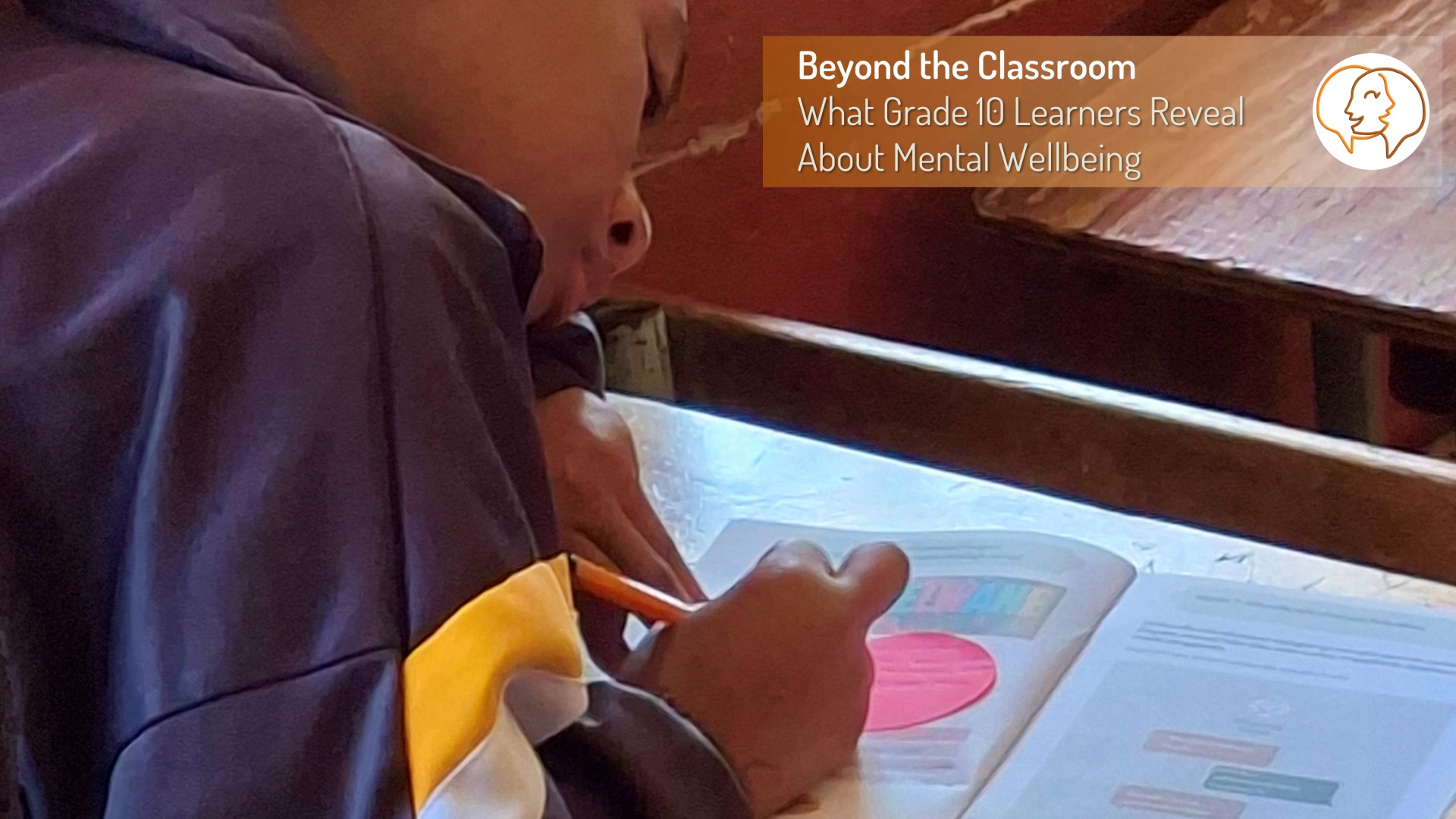
Whether “Impilo Yenqondo Ephephile” (a proprietary programme specifically developed for Grade 10 learners in isiZulu linguistic and socio-cultural context) or “Mental Health+ Movement“: It is the ability of our facilitators to take the learners during a limited-time class session through a journey of “mental health” discovery.
And the following happened at every workshop. The learners started to Khuluma and engage with our facilitators. The key issues were:
- Family conflict and lack of emotional support;
- bullying and peer relationships;
- emotional expression and emotional literacy;
- trauma, grief and psychological distress;
- substance use;
- academic pressure and future anxiety;
- need for trusted adults and safe spaces.
At the end of the session, they were invited to anonymously write us a note. Some learners also approached out social workers about their personal issues.
What learners are telling us reveals why South Africa needs to measure mental wellbeing differently, e.g.:
| “Ngifisa ukukhuluma ngendlela ekhaya abangiphatha ngayo” (I want to talk about how I am treated at home.) | The overall pattern suggests many learners are navigating emotional difficulties with limited support structures at home. |
At Khuluma, measurement does not begin with a spreadsheet. It begins with listening, when the learners “Khuluma”. Our facilitators and social workers hear similar concerns from learners across different schools and communities: struggles at home, challenges with belonging, emotional distress, academic pressure and the need for trusted support.
At the heart of a social workers’ profession is a reflective practice to continuously monitor, evaluate and adapt their interventions based on real-time feedback and interactions.
These individual experiences become patterns; patterns become observations; observations become hypotheses; and hypotheses become measurable indicators. This journey from frontline experience to structured evidence is helping shape the Khuluma Human Capital Index (KHCI), a developing framework designed to measure the social and wellbeing factors that influence young people’s ability to learn, participate and flourish.
Our objective is not simply to collect data, but to connect the dots between a young person’s mental wellbeing and the environment in which they live, learn and grow.
Every workshop therefore contributes both to improving mental health literacy today and to building a stronger evidence base for tomorrow
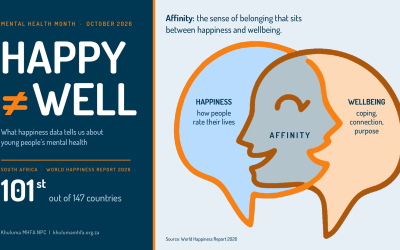
International wellbeing research increasingly identifies belonging and social support as among the strongest predictors of wellbeing. Our workshop observations suggest that South African learners are expressing the same need in their own words.
About Our Facilitators and Programme Developers
Khuluma’s non-clinical and pro-active mental health programmes are developed and delivered by social workers who combine professional training with practical experience in the communities they serve. Their person-in-environment perspective recognises that wellbeing is shaped not only by individual circumstances, but also by family, community, education, culture and economic conditions.
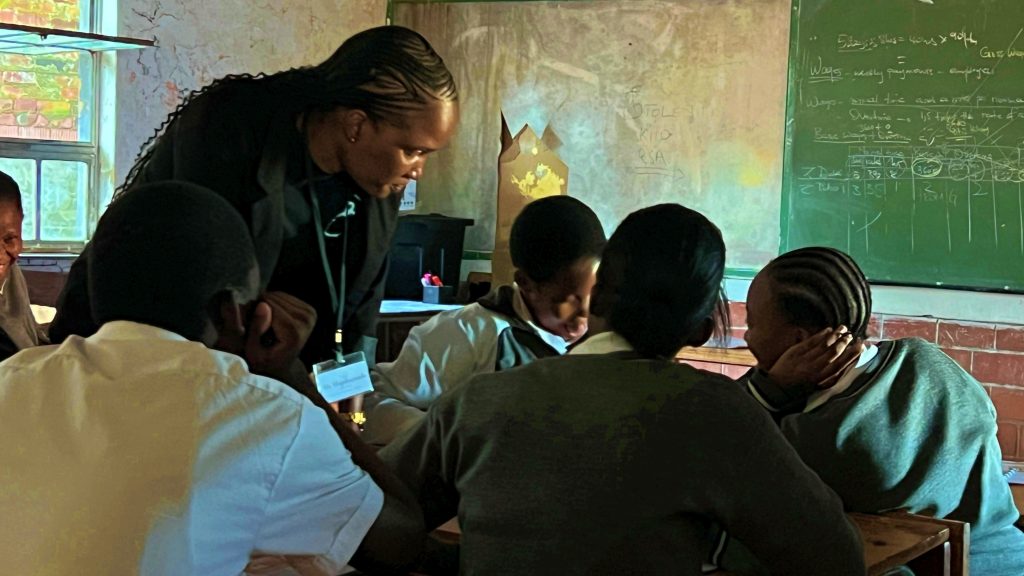
Every conversation matters. For learners, these workshops provide mental health education, early support and access to trusted adults. For social workers, they create opportunities to apply professional skills while generating the insights that inform future programmes, measurement and community action.
At the heart of a social workers’ profession is a reflective practice to continuously monitor, evaluate and adapt their interventions based on real-time feedback and interactions.
“Person-in-Environment” Perspective
When learners talk about family conflict, bullying, grief, academic pressure or the lack of trusted adults, they are describing more than individual emotional struggles. They are describing the environments that shape wellbeing. Social workers refer to this as a person-in-environment perspective, recognising that mental wellbeing is influenced by the interaction between people and the world around them.
Two social worker characteristics that guide Khuluma:
- Practice Wisdom: Social workers use a blend of empirical knowledge, critical evaluation of past responses, and intuitive reaction built through hands-on experience.
- Cultural Wisdom: One of the less visible but most important influences on Khuluma’s work comes from the cultural values embedded within the communities we serve. Many of Khuluma’s social workers have grown up within traditional isiZulu communities where identity, belonging, and mutual recognition remain central social values. This provides an important lens through which wellbeing is understood.
What the world is now measuring statistically as belonging, trust and social support have long been understood and practised within African communities.
Khuluma MHFA NPC & SocialWorkers.Network
Through SocialWorkers.Network, Khuluma is building a growing community of practitioners who contribute both frontline support and wellbeing insights from the communities they serve.
Just as physical health is more than the absence of disease, mental wellbeing is more than the absence of mental illness. It includes feeling connected, supported, valued and able to cope with life’s challenges.
If South Africa wishes to improve educational outcomes, economic participation and social cohesion, ..
we must better understand and measure the factors that enable young people to flourish. The outcome of Khuluma’s work will fulfil that wish through our triple-impact model:
First, for learners, the workshops provide mental health education, early support, and access to trusted adults who can help identify concerns before they become crises.
Second, for social workers, they create meaningful opportunities to apply and strengthen professional skills in a community setting while expanding their reach and impact.
Third, the programme generates valuable data and insights that can inform future interventions, improve measurement frameworks, and guide community-level action through the Khuluma Happiness & Community Insights (KHCI) platform.
Each workshop therefore contributes not only to stronger youth mental wellbeing, but also to building the professional capacity needed to support South Africa’s communities as well as contributing to the development of measurable mental health indicators.
Behind every workshop is a social worker. Through SocialWorkers.Network, Khuluma is building a growing community of practitioners who deliver programmes, support young people, identify emerging wellbeing challenges and contribute frontline insights from the communities they serve. Their observations help convert individual conversations into evidence that can inform programme design, measurement and future interventions.
SocialWorkers.Network connecting-the-dots between community practice, social innovation and evidence-based decision-making.
Triple Impact: Supporting Learners. Empowering Social Workers. Building Community Intelligence.
Media Contact
Khuluma MHFA NPC
Registration No.: 2025/718356/08 | PBO No.: 930090563 | NPO No.: 335-625
Email: Hello@KhulumaMHFA.org.za
Phone: +27 87 353 9800
Website: KhulumaMHFA.org.za
#KhulumaLetsTalk #ListeningToLearners #BelongingMatters #MentalWellbeing #YouthMentalHealth #SocialWorkersNetwork #EveryVoiceMatters #SchoolWellbeing #SouthAfricanYouth