Durban, South Africa (10 October 2026) – Today, WHO marks the 35th World Mental Health Day under the theme:
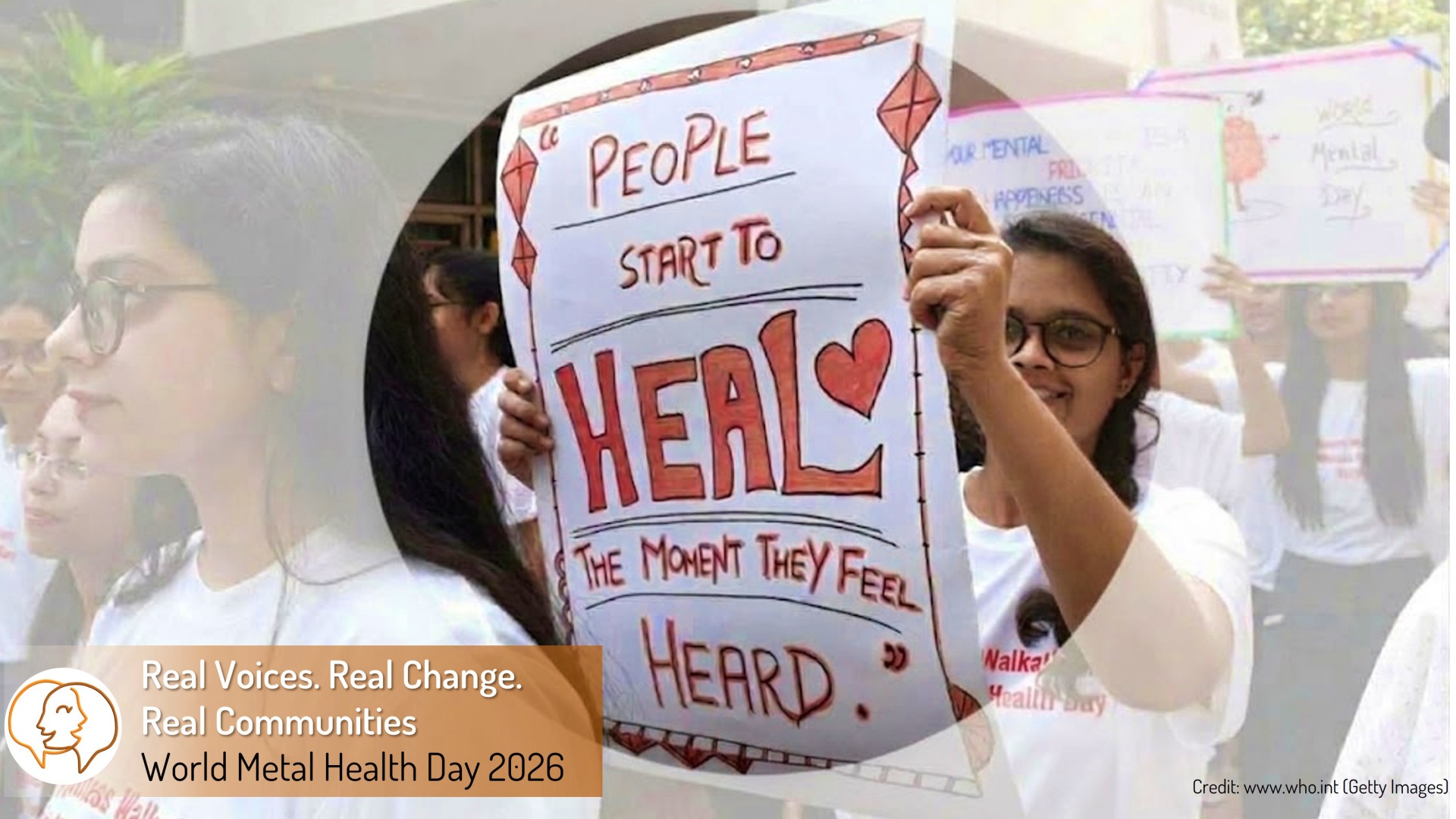
“Lived experiences heard: real voices, real change”
It is a powerful theme. But it is about much more than listening!
Behind the slogan lies a clear call to action: accelerate the shift toward community-based mental health and wellbeing support. According to WHO, that transition is happening too slowly around the world. Only 9% of countries have fully transitioned from institution-based mental health care to community-based models, while more than half remain in the early stages of that journey.
For us at Khuluma MHFA, that message could not be more relevant.
The Future of Mental Health Is Community-Based
For decades, mental health systems have been designed primarily to diagnose, treat and manage mental illness. Clinics, hospitals, psychologists, psychiatrists and specialist services play an essential role in helping people who are experiencing mental health conditions.
But these systems were never intended to carry the full responsibility for society’s mental wellbeing.
South Africa does budget for mental health and its national policy explicitly recognises the importance of mental health promotion and prevention. Yet much of the ..
system remains oriented toward responding to illness after it occurs rather than building wellbeing before problems emerge.
As a result, prevention and mental wellness promotion often receive less attention, visibility and investment than treatment services.
Treatment systems are largely reactive by design. They help people when they are struggling. They are not primarily structured to teach mental wellbeing, develop emotional literacy, strengthen resilience, reduce stigma, build supportive relationships, or create mentally healthy environments at population scale.
Yet this is precisely where the greatest opportunity exists: If we want healthier generations, we cannot focus only on treating mental illness.
We must also invest in promoting mental wellness.
A Missing Investment Priority
The conversation about mental health funding often begins when people are already in distress.
By then, we are dealing with consequences.
- What if we invested earlier?
- What if we invested in helping young people, workers, families and communities understand mental wellbeing before a crisis develops?
- What if we invested in environments that help people thrive, not merely survive?
- What if we treated mental wellbeing as a national asset worthy of protection and development?
The real opportunity facing South Africa is not simply to spend more on treatment. It is to invest more deliberately in mental wellness promotion, prevention and community-based support at scale. National policy recognises these priorities, and leading mental health stakeholders have repeatedly called for stronger investment in promotion, prevention and community-level interventions.
Mental wellness should not be an afterthought in public health.
It should be a national investment priority.
Because every rand invested in helping people stay mentally well has the potential to reduce future distress, improve educational outcomes, strengthen communities, support productivity and reduce pressure on already stretched treatment services.
Safe Spaces Matter
Community-based mental wellbeing is often misunderstood as simply moving services out of hospitals and into local facilities. It is much more than that.
It is about creating safe spaces where people can speak openly, seek support, be heard without judgement and access help when needed.
- Those safe spaces may be classrooms.
- They may also be workplaces, homes, faith communities, sports clubs, community organizations and public institutions.
- Mental wellbeing grows where people feel safe, connected and valued.
- The strongest mental health systems are therefore not only those with excellent clinical services. They are also those with strong communities, supportive relationships and trusted spaces where conversations about mental wellbeing are normal rather than exceptional.
What This Means for Khuluma
At Khuluma, we believe mental wellbeing should not begin when a person enters a clinic.
- It should begin much earlier.
- It should begin with education.
- It should begin with conversation.
- It should begin in communities.
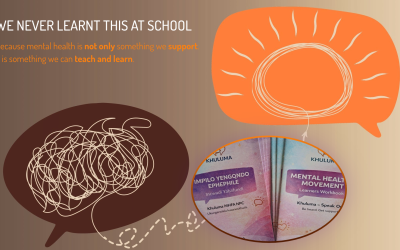
Through Positive Mental Wellness (Impilo Yenqondo Ephephile) Programmes, mental wellbeing education, awareness programmes and community engagement, we help equip people with the knowledge, confidence and practical skills to recognise distress, support one another and seek appropriate help when needed.
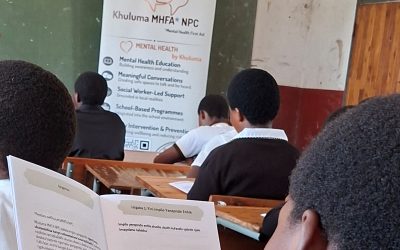
Schools remain an important part of this work. Young people need opportunities to learn about mental wellbeing in the same way they learn about physical health, relationships and life skills.
But the principle extends well beyond schools.
Mentally healthy communities require mentally healthy workplaces, families and community networks.
This is not a substitute for professional care.
It is the foundation that makes professional care more accessible, more effective and often less urgently needed.
This is the type of community-based mental wellbeing infrastructure that the world needs if the vision outlined by WHO is to become reality.
Real Voices Must Be Heard and Understood
The theme of World Mental Health Day 2026 reminds us that lived experience is a form of expertise. People who have experienced mental health challenges understand needs, barriers and opportunities that cannot always be seen through research, policy or professional training alone.
But for South Africa, there is another important dimension. People express distress, resilience, hope and wellbeing through the language, culture and community context that surrounds them.
A learner in Durban may describe their experience differently from a teacher in Limpopo, a factory worker in Gauteng or a grandmother in the Eastern Cape:
- Their experiences are equally valid.
- Their voices deserve equal respect.
- Effective mental wellbeing support therefore cannot be separated from culture, language and lived reality.
- Listening without understanding risks missing the very message people are trying to communicate.
- Real change occurs when people are heard, understood and supported within the context of their own communities.
From Awareness to Investment
If “Real Voices, Real Change” is to become more than a slogan, it must influence how society allocates resources. Governments, funders, philanthropists, schools and businesses should not only ask how many people received treatment.
They should also ask:
- How many young people learned mental wellbeing skills?
- How many workplaces created psychologically safer environments?
- How many schools now provide mental wellbeing education?
- How many teachers and managers feel equipped to support people in distress?
- How many communities have access to Positive Mental Wellness (Impilo Yenqondo Ephephile) Programmes and peer-support networks?
- How many crises were prevented before clinical intervention became necessary?
These are the questions that help measure wellness, not just illness. And these are the investments that help create lasting change.
Moving from Treatment to Wellbeing
For Khuluma, the theme “Real Voices, Real Change” is not simply about being heard. It is about transforming how society thinks about mental health/wellness.
It is about shifting part of our focus from illness to wellness:
- From crisis response to prevention.
- From stigma to understanding.
- From institutional dependence to community capability.
- From listening to action.
- And from treating mental illness alone to actively promoting mental wellbeing.
Because the future of mental health will not be built only in hospitals, clinics or consulting rooms.
It will also be built in schools. In workplaces. In homes. In faith communities. In neighbourhoods.
And in the everyday conversations that help people thrive long before they ever need treatment. That is the shift the world is being called to make and that is the future Khuluma is helping to build.
About Khuluma MHFA NPC
Khuluma MHFA NPC provides mental health education, awareness, and support programmes to young people across South Africa, empowering them with the skills and confidence to navigate emotional challenges and support one another now and in the years to come.
Media Contact
Khuluma MHFA NPC
Registration No.: 2025/718356/08 | PBO No.: 930090563 | NPO No.: 335-625
Email: Hello@KhulumaMHFA.org.za
Phone: +27 87 353 9800
Website: KhulumaMHFA.org.za
📚 Explore our resource library: 🔗 Downloads
#WorldMentalHealthDay #MentalHealthFirstAid #CommunityMentalHealth #Khuluma #WMHD2026 #MentalHealthLiteracy #MentalWellness #Khuluma #YouthMentalHealth #RealVoicesRealChange
References
World Health Organization (WHO)
World Mental Health Day 2026: Lived experiences heard, real voices, real change
World Health Organization (WHO)
https://www.who.int/campaigns/world-mental-health-day/2026
South African Mental Health Policy and Financing
National Mental Health Policy Framework and Strategic Plan 2023-2030
National Department of Health, South Africa
https://www.health.gov.za/wp-content/uploads/2024/02/National-Mental-Health-Policy-framework-and-strategic-Plan-2023-2030.pdf
National Mental Health Policy Framework and Strategic Plan 2023-2030 (publication version)
https://www.spotlightnsp.co.za/wp-content/uploads/2023/04/NMHP-FINAL-APPROVED-ON-30.04.2023.pdf
Mental Health Investment Case for South Africa
South African Medical Research Council (SAMRC)
https://www.samrc.ac.za/research-reports/mental-health-investment-case-south-africa
Additional Reading
SA’s mental health needs better funding
South African Society of Psychiatrists (SASOP)
https://www.sasop.co.za/post/sa-s-mental-health-needs-better-funding