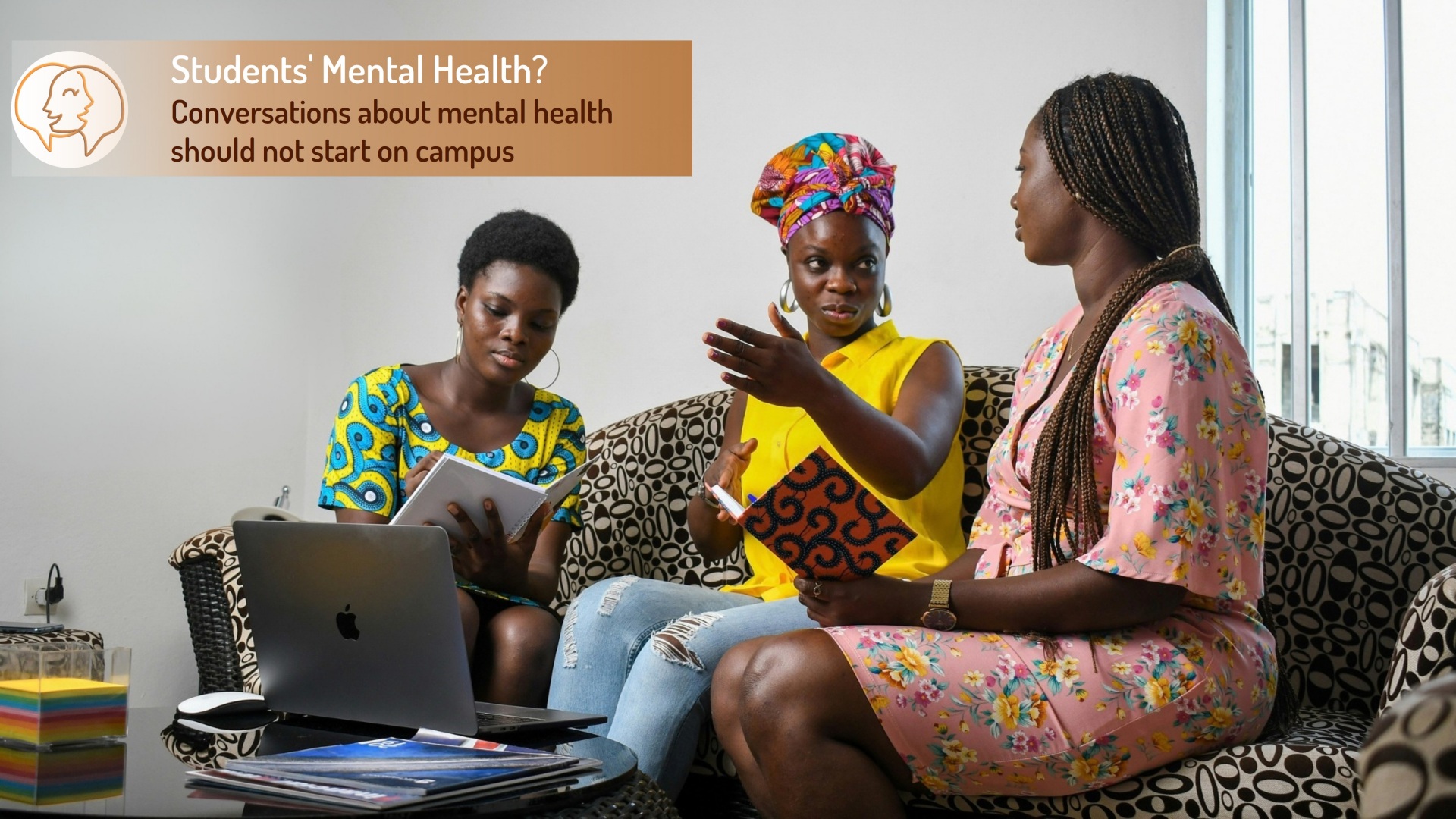
Durban, South Africa (08 October 2026) – Ask a university how many of its students need mental health support, and the honest answer is: more than it can reach. A large student mental health survey, initiated by Universities South Africa in 2020, found that up to 20% of university students in South Africa need support, and that up to 77% of students with a mental health disorder are not getting help [1,2].
Stigma and limited access are the main reasons.
Higher Health, the national agency for student health and wellness, describes the same picture another way: one in five young South Africans in higher education lives with moderate to severe mental health difficulties. [3]
The system is stretched. In a December 2023 parliamentary reply, the Department of Higher Education noted that universities and some TVET colleges have psychologists and counsellors on staff, but that the need exceeds the number of psychologists available. [4] At UCT, anxiety and depression were the leading reasons students sought help in 2021. Universities are responding with triage systems, digital apps, support groups and, increasingly, trained students who support other students.
Across the continent the gap is wider still. A December 2025 article in L’Étudiant Africain looks at what that means on African campuses. [5]
What a Recent African Campus Article Said
NB: This is Khuluma’s own summary, not a translation.
The article starts from a World Health Organization figure: in sub-Saharan Africa, more than 85% of people with a mental disorder do not get the care they need. Universities, it argues, are an even bigger blind spot. Campuses concentrate academic pressure, money worries, family expectations and, in some regions, insecurity, yet mental health is rarely part of education policy and is still spoken about quietly, if at all. [6]
To explore who is more vulnerable, lecturers or students, the author interviewed Dr Jean-Pierre Mbame, a clinical psychologist and researcher at the University of Ngaoundéré in northern Cameroon.
Lecturers: constant pressure, little support
In the insecure north of Cameroon, lecturers carry a heavy teaching load, pressure to publish and administrative duties, often with little recognition and precarious conditions. Stigma makes it worse: in many communities mental illness is read through a spiritual lens, sometimes as a curse, and support structures are almost non-existent. The result can be anxiety, depression and burnout.
Students: pressure that grows with the level of study
Academic pressure, high expectations, financial strain and housing problems all weigh on students. According to Dr Mbame, undergraduates are often less aware of what is at stake, while Master’s and PhD students feel the heaviest load: publication pressure, thesis deadlines and worry about finding work afterwards.
Two structural gaps
-
-
- Training without practice. Cameroon trains mental health specialists every year, but practical placements are almost absent, so few graduates are ready to help people in difficulty.
- No data. There are no official or systematic statistics on student mental health, which makes it hard to persuade authorities to act.
-
Seven things the article proposes
-
-
- Campus support centres with qualified staff and guaranteed confidentiality.
- Mental health first aid training for lecturers, tutors and administrators, with clear referral routes.
- Peer listening, because students confide more easily in other students and stigma is lower.
- Mental health in the curriculum: stress management, psychosocial skills, workshops and testimonies.
- Reliable data: regular anonymous wellbeing surveys, university mental health observatories and annual reports.
- Media and public voices to talk about the subject seriously and without sensationalism.
- Local cultural strengths: talking circles inspired by traditional community dialogue, involvement of elders, holistic approaches.
-
Examples it points to include the University of Cape Town’s Student Wellness Service (which has a student peer volunteer project), the RAPHA-Psy Foundation in Cameroon, and the Nightline student listening service in France.
Peer Support at South African Universities: An Overview
The article’s example from UCT raised a bigger question: how common is this in South Africa? UCT’s 2019 “Wellness Buddies” project, a mental health peer intervention with student volunteers, is now described by UCT as a Peer Intervention Programme with peer counsellors. [7]
South Africa has 26 public universities, and we looked at what each one offers:
- Ten have a dedicated programme in which trained students support their peers on mental health or wellbeing.
- Another eight run peer mentoring or peer education with a wellbeing element, sometimes at faculty level only.
- For eight we found nothing beyond the national higher health peer educators, which does not mean nothing exists, only that nothing showed up online.
The link to the detailed breakdown is in the below references
Why Khuluma matters
Everything above is the downstream picture: students who have already reached campus, and services working hard to keep up with demand. Khuluma works upstream.
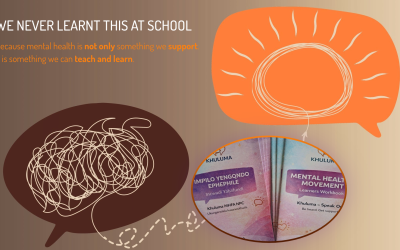
We are already introducing proactive, non-clinical mental health support at secondary/high school level, including Peer-to-Peer Mental Health First Aid (MHFA). Our programmes are developed and delivered by social workers; in the language and cultural context of the learners they serve. Impilo Yenqondo Ephephile, our programme for Grade 10 learners, is built for an isiZulu linguistic and socio-cultural context. That is adaptation, not translation.
It is not a substitute for professional care. It is the foundation that makes professional care more accessible, more effective and often less urgently needed.
What Learners Tell us
At every workshop, the learners start to “khuluma”: to talk. The same themes keep coming up:
- Family conflict and lack of emotional support
- Bullying and peer relationships
- Emotional expression and emotional literacy
- Trauma, grief and psychological distress
- Substance use
- Academic pressure and future anxiety
- The need for trusted adults and safe spaces
Learners also write us anonymous notes at the end of a session, and some approach our social workers about personal issues. We unpack what we are hearing in our media release, Beyond the Classroom: What Grade 10 Learners Reveal About Mental Wellbeing, published on 7 October.
Real Voices, Understood
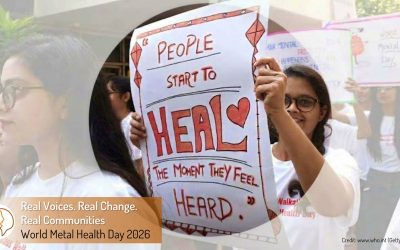
World Mental Health Day this Saturday, 10 October, carries the WHO theme “Lived experiences heard: real voices, real change.[] WHO says the shift to community-based mental health support is happening too slowly: only 9% of countries have fully moved from institution-based care to community-based models. For us, real voices must not only be heard. They must be understood, in their own language, culture and community.
A learner who leaves Grade 10 able to name what they feel, and who knows a trusted peer or adult can help, arrives at campus, college or work better prepared, and is easier to support. That is the case for starting at school. Today’s learners are tomorrow’s students and workforce.
About Khuluma MHFA NPC
Khuluma MHFA NPC provides mental health education, awareness and support programmes to young people across South Africa. Hello@KhulumaMHFA.org.za | KhulumaMHFA.org.za
Media Contact
Khuluma MHFA NPC
Registration No.: 2025/718356/08 | PBO No.: 930090563 | NPO No.: 335-625
Email: Hello@KhulumaMHFA.org.za
Phone: +27 87 353 9800
Website: KhulumaMHFA.org.za
Resources:
- Supporting Information: https://khulumamhfa.org.za/download/2026108-media-release-supporting-information-sa-universities-mental-health-peer-support/
- org.za/downloads
References:
[1] Universities South Africa. (2020). Reports and updates on student mental health and support mechanisms during COVID-19. USAf Supporting Student Success Forum. https://www.usaf.ac.za/
[2] University of the Free State. (2023, October 16). Capacitating students to navigate their mental health journey. UFS Campus News. https://www.ufs.ac.za/templates/news-archive/campus-news/2023/october/michelle-n%C3%B6thling
[3] Department of Higher Education and Training. (2023, July 20). Launch of Higher Health Civic Education and Health Skills Programme (Speeches and Ministerial Briefings). South African Government. https://www.gov.za/news/speeches/minister-blade-nzimande-launch-higher-health-civic-education-and-health-skills
[4] Department of Higher Education and Training. (2023, December). Parliamentary reply to question posed regarding psychological and counselling services at public universities and TVET colleges. Parliament of the Republic of South Africa. https://www.parliament.gov.za/
[5] “Burnout, anxiété, dépression : la souffrance cachée des campus africains”, by Sambo Saliou Diallo, L’Étudiant Africain, 13 December 2025. https://letudiantafricain.com/blog-letudiant-africain/burnout-anxi%C3%A9t%C3%A9-d%C3%A9pression-la-souffrance-cach%C3%A9e-des-campus-africains
[6] World Health Organization. (2022). World mental health report: Transforming mental health for all. World Health Organization. https://www.who.int/teams/mental-health-and-substance-use/world-mental-health-report
[7] University of Cape Town. (2019, August 14). UCT mental health support services. UCT News. https://www.news.ac.za/article/-2019-08-14-uct-mental-health-support-services