
An article on Student Mental Health in South Africa was published by the Daily Maverick on 13 July 2026. “One of the clearest findings from our study was that students tended to fall into two broad profiles”. The one was called
“Strained and Stressed, was characterised by greater financial strain, poorer food security, lower life satisfaction, weaker social support for health, and higher loneliness.”
The study concluded that universities should also provide psychosocial care to create environments where students can flourish. It did not provide more information on the size of that profile, i.e. what percentage of the surveyed students fell into that group. From our work, we suggest that:
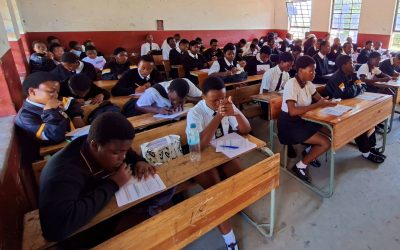
- the majority (60% – 70%) of the students fall into the “Strained and Stressed profile”, because over 70% of first-year students at South Africa’s public universities come from public schools in township, rural, or lower-income areas.
- the percentage size of this ‘profile’ will grow in the years to come:
- current university student (wellness) programs are reactive and
- there are no early intervention and mental health promotion programmes for high-school/secondary school learners.
While the study sampled 1,366 students from public, contact-based South African universities the article does not provide a demographic breakdown of the sample or indicate the distribution of students across different socio-economic groups, in what year the students were. We submit that already many first-year students already belong to the “Strained and Stressed” Mental Health profile, as over 70% (to 80%) of all students come from secondary schools that are in townships, rural areas, or lower-income communities. All, or nearly all, of South Africa’s 26 public universities have established student counselling, wellness, or mental health support services. These interventions are typically reactive in nature. A 2020 study suggested that roughly 1 in 5 students access mental health services during the previous 12 months, while a substantial proportion of students experiencing mental health difficulties do not receive professional support.
Based on our research, fieldwork, and engagement with learners, we contend that
meaningful preparation for the mental health challenges of higher education begins long before a student arrives on campus. Early intervention and mental health promotion programmes must be provided as a critical component of preparing secondary school learners for their future at universities or a workplace.
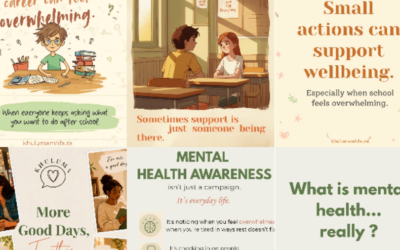
To make that a reality is the core mission of Khuluma MHFA Non-Profit Company. Khuluma MHFA addresses a critical gap in offering real solutions to Grade 10 learners as they start their journey towards matriculation. We started our programs in township Schools in the Durban area but ultimately will make assist to boilerplate psychological and emotional health of one generation at a time.
Recent (2023, DHET) data suggest that 20% to 25% of school leavers enter university. Therefore university-based mental health services can only reach a minority of South Africa’s youth. The majority of young people will instead enter the labour market, attend a TVET college. 30% of the school leavers will become NEET (Not in Employment, Education or Training) and part of the 3million pool of unemployed youth. Early mental health promotion in secondary schools therefore offers
one of the few opportunities to reach young people before their educational and career paths diverge.
For more information on the work of Khuluma MHFA NPC, contact the team.
Source: dailymaverick.co.za who republished an article from The Conversation under a Creative Commons license. Read the original article