Durban, South Africa (3 September 2026) – During the current phase of Khuluma MHFA NPC’s Positive Mental Health Programme in Mandeni, learners have been engaging with our proprietary Impilo Yenqondo Ephephile workbook, which was specifically developed to deliver workshops within an isiZulu linguistic and socio-cultural context. While every school community is unique, one message has emerged consistently:
Young people want safe spaces where they can be heard, understood and supported.
What Mandeni Learners Are Telling Us
Across multiple Grade 10 classes, learners continue to raise strikingly similar concerns. What has become increasingly clear is that many of the challenges affecting learners begin long before they arrive at school each morning.
Family relationships emerged as one of the strongest recurring themes during our first week in iLembe. Learners spoke about difficult family circumstances, feeling unsupported and struggling to communicate openly with caregivers. In several instances, learners identified teachers as the adults they trusted most when facing personal challenges. Different schools. Different learners. The same voices. The same need.
What We Heard from Learners
- Family conflict,
- Absent parents,
- Grief,
- Bullying,
- Loneliness, Feeling misunderstood,
- Uncertainty about the future and
Over the last few decades, enormous amounts of mental health education content have been developed internationally. Since 2023, Khuluma has been developing and testing positive mental wellness programmes for South Africans. Our experience has reinforced an important lesson: effective mental wellness education requires more than translation. While many emotional experiences are shared across humanity, …
… the language, culture and community contexts through which people understand and discuss those experiences are not.
This is why Khuluma has focused on adapting proven approaches to the realities of South African learners, rather than creating entirely new ones. The experience of stress, grief, family relationships, emotional expression and help-seeking may be human experiences, but the way people understand and talk about those experiences is shaped by culture, language and community. This is why Khuluma has focused on adaptation rather than invention. We are not reinventing the wheel. We are taking proven international practices and translating them into the social and cultural realities of South African learners.
Why isiZulu Matters
Mental wellness education cannot simply be translated. It must be understood, discussed and experienced within the language and cultural realities of the community being served. One of the questions we wanted to explore as we moved from Durban into the iLembe District was whether the programme would resonate equally strongly with learners from different schools and communities.
The experience of stress, grief, family relationships, emotional expression and help-seeking may be human experiences, but the way people understand and talk about those experiences is shaped by culture, language and community. This is why Khuluma has focused on adaptation rather than invention. We are not reinventing the wheel. We are taking proven international practices and translating them into the social and cultural realities of South African learners.
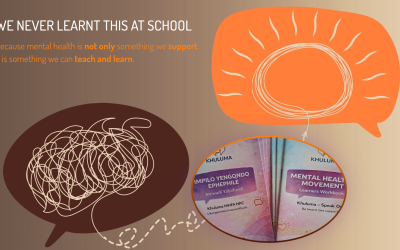
Impilo Yenqondo Ephephile is more than a translated workbook. It is supported by isiZulu facilitator training manuals and is part of a broader effort to make mental wellness education culturally relevant and linguistically accessible for the communities we serve. Learners engage in topics such as emotional wellbeing, relationships, communication, bullying, peer support, anxiety, resilience and help-seeking behaviour through examples and discussions that reflect the realities of their lives.
During our first week in iLembe, learners engaged openly with the material and participated actively in anonymous wellbeing activities. While some terminology remains more familiar in English, the overall response reinforces our belief that learners engage more deeply when mental wellness content is presented within their own linguistic and cultural context. It allows them to distinguish between mental illness and mental wealth.
In many respects, Khuluma is contributing to the development of a South African mental wellness vocabulary. One conversation. One classroom. One workbook at a time.
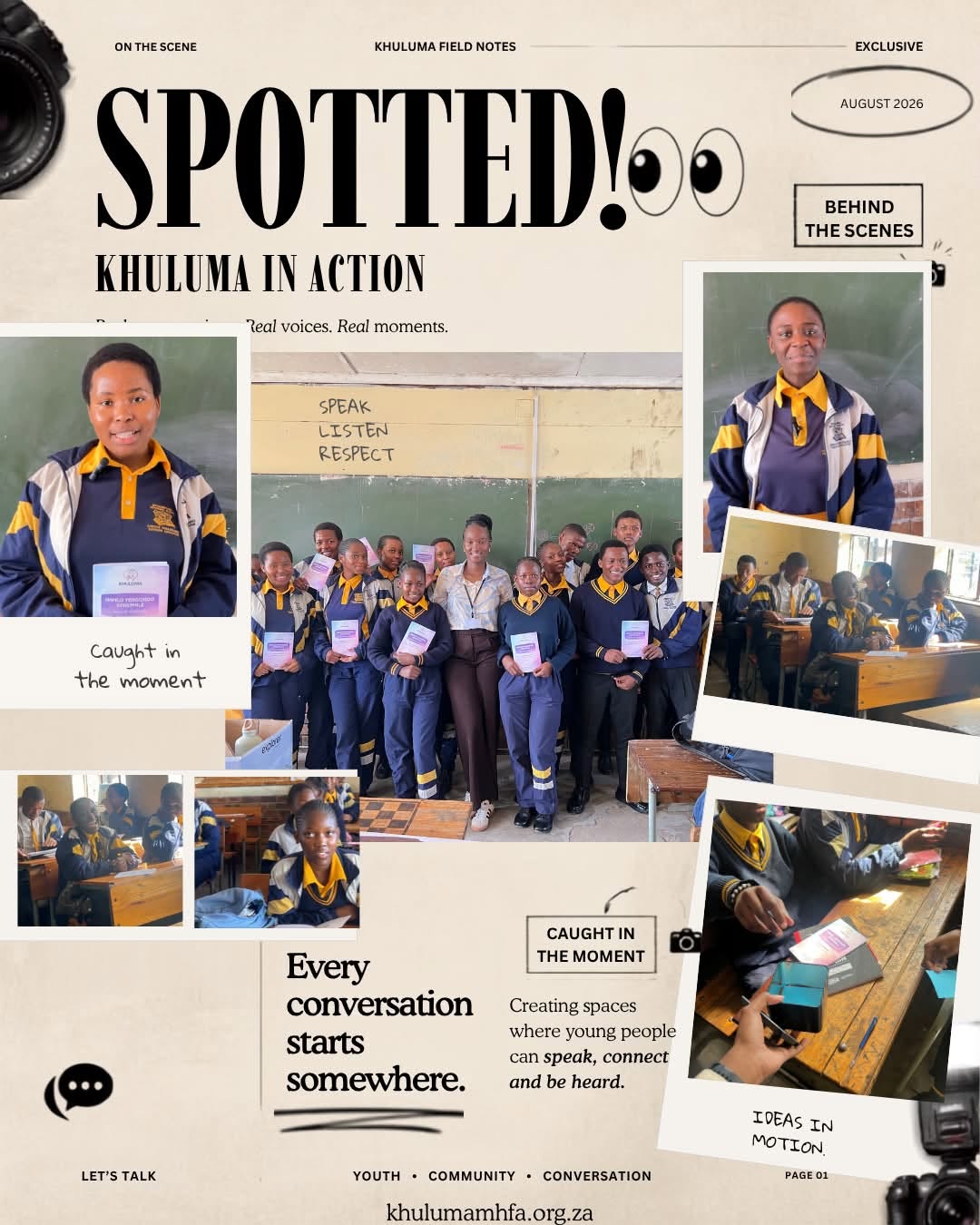
Signs it’s working
While many learners initially struggle to define mental health, they readily engage in discussions about emotions, relationships and coping with life’s challenges. and those conversations e opens a pathway into deeper discussions about mental health.
One of the most impactful aspects of the programme continues to be the anonymous participation activities.
Young people are willing to engage. They are willing to talk. But first they need safe spaces in which to do so.
Although the programme was designed for learners, educators have started asking whether similar mental wellness support could be provided for school staff. This reinforces an important lesson: learner wellbeing and educator wellbeing cannot be separated.
Growing Demand Across (Mandeni) Secondary Schools
Khuluma has been developing and refining this model since 2023 and the experience in iLembe is confirming that the need extends beyond a single school, community or district. Schools are opening their doors. Learners are engaging. Educators are asking questions. The demand is real. By the conclusion of the current implementation phase, Khuluma’s cumulative reach is expected to exceed 1400 learners by the end of 2026.
Call to Action
What we are witnessing in Mandeni is encouraging. Learners are engaging openly. Schools are creating space for these conversations. Educators are recognising the value of positive mental wellness education and, in some cases, are asking whether similar support can be made available for school staff.
The challenge is no longer whether there is a need. The need is clear.
The challenge is ensuring that programmes such as Impilo Yenqondo Ephephile can reach more learners, more schools and more communities.
As a non-profit organisation, Khuluma MHFA NPC relies on sponsorships, partnerships and donations to develop and deliver culturally relevant mental wellness education. Every contribution helps us place resources in classrooms, train facilitators, engage learners and create safe spaces where young people can speak openly about the challenges they face.
Scaling Impact
“What continues to encourage us is learners’ willingness to engage when mental wellness is discussed in a way that reflects their language, culture and lived experiences,” said Misiwe Mahphumulo, Director of Khuluma MHFA NPC and Workshop facilitator. “Our experience in Mandeni reinforces the importance of creating safe spaces where young people can speak openly, be heard and build resilience.”
Partner With Us
We invite individuals, businesses, foundations and public sector partners to join us in expanding access to mental wellness education for young people across KwaZulu-Natal. Whether through funding, sponsorship, strategic partnerships or introductions to potential supporters, your involvement can help ensure that more learners can be heard, build resilience and develop the skills needed to navigate life’s challenges.
KhulumaMHFA.org.za/support-donate
Because every learner deserves the opportunity to thrive, not merely cope
About Khuluma MHFA NPC
Khuluma MHFA NPC provides mental health education, awareness, and support programmes to young people across South Africa, empowering them with the skills and confidence to navigate emotional challenges and support one another now and in the years to come.
Media Contact
Khuluma MHFA NPC
Registration No.: 2025/718356/08 | PBO No.: 930090563 | NPO No.: 335-625
Email: Hello@KhulumaMHFA.org.za
Phone: +27 87 353 9800
Website: www.KhulumaMHFA.org.za
Listening to Mandeni Learners
Q&A About Mental Wellness, Language and Support in Schools.
What are Mandeni learners telling us?
Across multiple schools, learners have been remarkably open about the challenges they face. Topics raised repeatedly include family conflict, absent parents, grief, bullying, loneliness, feeling misunderstood, uncertainty about the future and the desire for trusted adults who will listen.
While each learner’s story is unique, these themes have appeared consistently enough to highlight the importance of creating safe spaces for discussion and reflection.
Why focus on mental wellness in schools?
Schools are one of the few places where young people come together regularly and where supportive relationships can be developed.
Many of the challenges learners describe originate outside the classroom, yet they have a significant impact on concentration, attendance, relationships and academic performance. Our experience suggests that learners are often eager to talk about these challenges when given appropriate opportunities to do so.
Mental wellness education helps learners understand emotions, develop healthy coping strategies and recognise when they or others may need support.
What challenges are learners talking about most often?
While responses vary between schools and classes, common themes include:
-
Family conflict
-
Absent parents
-
Grief and loss
-
Bullying
-
Loneliness
-
Relationship challenges
-
Concerns about the future
-
Difficulty finding trusted adults to confide in
What is Impilo Yenqondo Ephephile?
Why is the programme delivered in isiZulu?
Language shapes how people understand and discuss their experiences.
While mental wellness is a universal topic, the ways people talk about emotions, relationships, stress, grief and support are influenced by culture, language and community. Delivering the programme in isiZulu allows learners to engage with these topics using concepts and expressions that are more closely connected to their everyday experiences.
Is this simply a translated workbook?
No!
Translation is only one part of the process. The programme seeks to contextualise mental wellness education within the realities of isiZulu-speaking communities.
The goal is not simply to change the language of the content, but also to ensure that examples, discussions and learning activities are relevant to the social and cultural environment in which learners live.
How are learners responding?
The response has been ‘more than encouraging’.
Learners have actively participated in classroom discussions and anonymous wellbeing activities. Many who initially struggled to define “mental health” were able to engage confidently once conversations shifted towards emotions, relationships and coping with life’s challenges.
The experience continues to reinforce the importance of creating safe, non-judgemental spaces where young people can be heard.
What role do educators play?
Educators are often among the most trusted adults in learners’ lives.
During programme activities, some learners identified teachers as the people they would be most comfortable approaching when facing personal challenges. At the same time, educators themselves have shown growing interest in mental wellness support and have begun asking whether similar programmes might also be available for school staff.
This highlights the close connection between learner wellbeing and educator wellbeing.
What has surprised us most?
Perhaps the most significant insight has been learners’ willingness to engage.
Young people are often described as reluctant to discuss difficult topics. Our experience has been different. Given a safe environment, respectful facilitation and culturally relevant resources, learners have shown that they are both willing and able to participate meaningfully in conversations about wellbeing
Can the programme scale?
Yes!
Khuluma’s programmes have been designed with scalability in mind. Structured learner workbooks and facilitator resources help promote consistency while allowing delivery within local communities.
The model has also been developed by registered social workers with experience in psycho-social support and youth engagement, providing a practical foundation for expansion into additional schools and districts.
The primary constraint to growth is not demand from schools, but access to sustainable funding and implementation partnerships.
Who delivers the programme?
Khuluma believes that social workers are uniquely positioned to facilitate conversations around wellbeing, resilience and psycho-social support within communities.
The programme has been developed by registered social workers and is designed to be delivered through a scalable model that can empower qualified social workers to support schools and learners at a community level.
This approach also creates opportunities to strengthen local support networks while expanding access to mental wellness education.
How can people and organisations support this work?
Schools are opening their doors. Learners are engaging. Educators are asking questions.
The opportunity exists to expand access to culturally relevant mental wellness education across additional schools and communities.
Individuals, businesses, foundations and public-sector partners can support this work through sponsorships, funding partnerships, donations or strategic introductions.
Every contribution helps create opportunities for young people to be heard, develop resilience and access mental wellness education before challenges reach crisis point.
Support Khuluma MHFA NPC
Registration No.: 2025/718356/08 | PBO No.: 930090563 | NPO No.: 335-625
https://khulumamhfa.org.za/support-donate/
One Final Question: What Is the Most Important Thing We Have Learned?
Mandeni learners are willing to talk.
When young people are given safe spaces, trusted facilitators and opportunities to engage in their own language and cultural context, meaningful conversations about mental wellness become possible.
And …
… every conversation is an opportunity to strengthen resilience, build understanding and create a healthier future for the next generation.