October is Mental Health Month. It is a good opportunity to ask a simple question: can happiness data tell us whether young people are mentally well? The answer is more complicated than we expected.
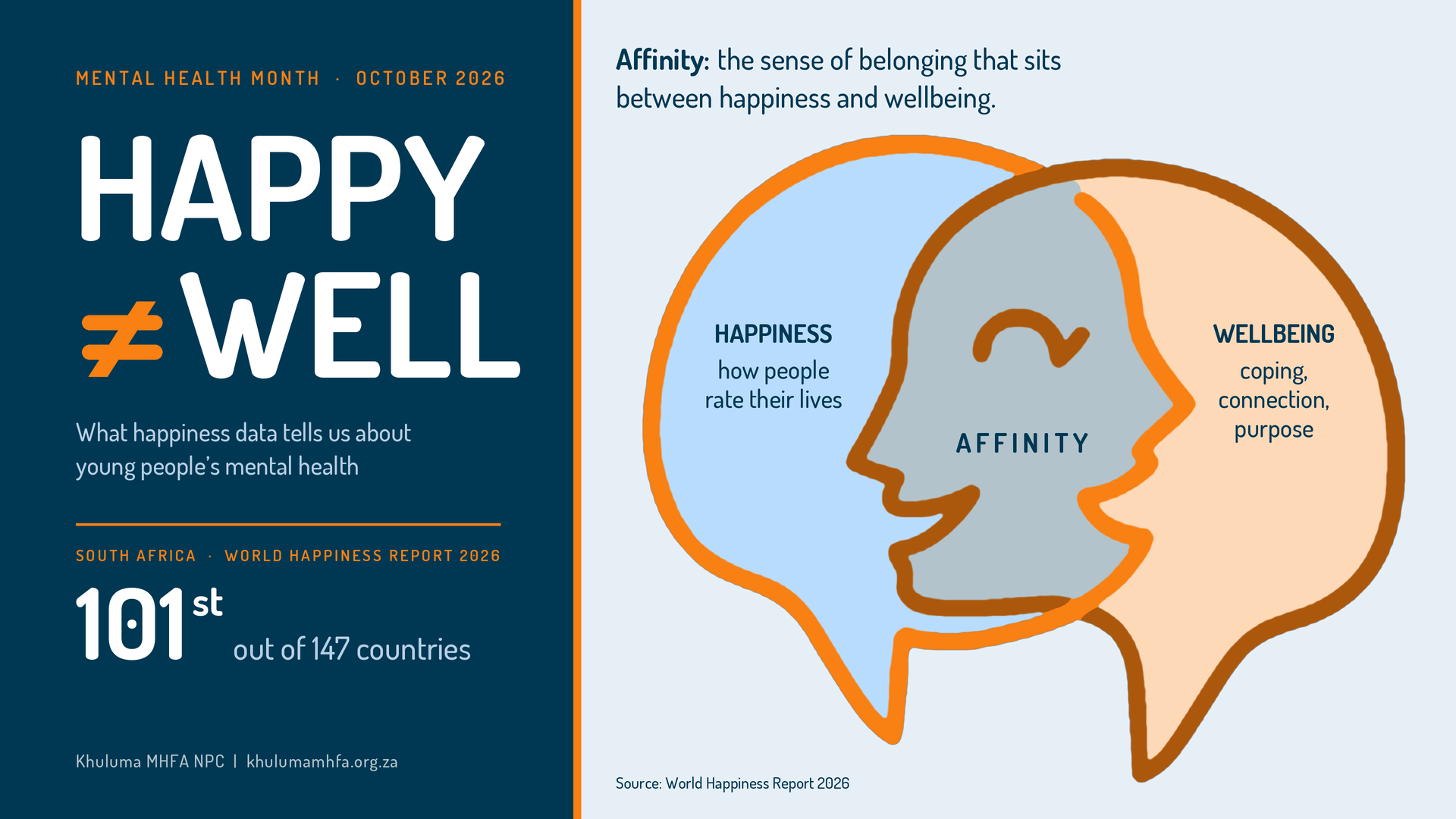
Every year the World Happiness Report ranks countries according to how people evaluate their lives. In 2026, South Africa ranked 101st out of 147 countries.
Yet happiness rankings are not mental health scores.
They tell us how people feel about their lives today, not necessarily how well they are coping, learning, adapting, working, or contributing.
Finland illustrates this paradox. It remained the happiest country in the world for the ninth consecutive year, yet research points to rising psychological distress among younger people. Switzerland presents a similar picture. High life satisfaction and increasing youth distress can exist side by side. Happy is not always the same as well.
For young South Africans, the story is equally nuanced. Many young people report resilience, hope, and moments of joy, while expressing growing uncertainty about their future prospects. This is why Khuluma believes we need to look beyond happiness alone.
Happiness tells us how people evaluate their lives today. Mental wellbeing tells us whether people can cope, connect, learn, work, adapt, and contribute. If happiness is an outcome measure, mental wellbeing may be a leading indicator of future educational achievement, workforce participation, productivity, and social resilience.
The 2026 World Happiness Report also highlights something that matters even more than screen time:
Belonging and connection.
Khuluma uses the term Affinity to describe this sense of connection …
.. between individuals, families, schools, communities, and support networks. Affinity sits between happiness and wellbeing, helping explain why some people flourish despite adversity while others struggle despite favourable circumstances.
So what can Khuluma MHFA contribute?
We do more than deliver mental health literacy workshops. Every workshop creates an opportunity to understand how young people experience belonging, resilience, uncertainty, connection, and hope. This learning is helping shape the proposed Khuluma Human Capital Index (KHCI), an initiative aimed at developing practical measures of youth mental wellbeing.
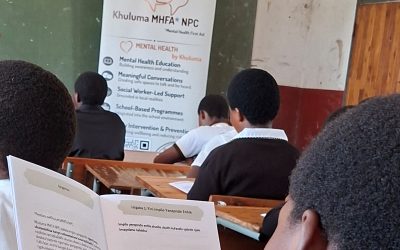
Our programmes take mental health education directly into schools. Qualified social workers facilitate workshops in English and isiZulu, using culturally appropriate approaches rather than simple translation. In August 2026, Khuluma delivered 18 Grade 10 workshops across five KwaZulu-Natal secondary schools, reaching more than 700 learners.
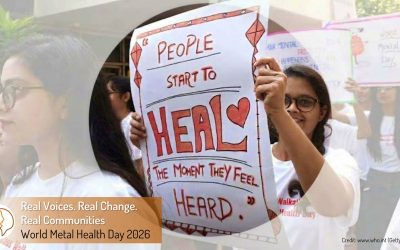
What we consistently observe is that young people want to be heard:
- They want trusted adults and friends they can turn to.
- They want practical skills to support one another.
Mental health first aid cannot remove every challenge facing young people, but it can help learners recognise when someone is struggling and give them the confidence to respond.
This Mental Health Awareness Months, we also share some of our research as a part of a new KHULUMA INSIGHTS publication series that explores the evidence, ideas, and conversations shaping youth mental wellbeing in South Africa. Issue 001, (The Happiness-Mental Wellbeing Paradox: Happy ≠ Well – the link is below), examines why happiness and mental wellbeing are not always the same thing, and why that distinction matters for South Africa’s future.
When we ask young people whether they are happy, we learn something important. When we ask whether they feel connected, supported, hopeful, and able to cope, we learn something even more important. The future of South Africa depends on understanding both.
– Philipp D. Steiner, Director
Ultimately, the goal should not be limited to reducing mental illness. It should be about creating the conditions in which people and communities can flourish. Just as physical health is more than the absence of disease, mental wellbeing is more than the absence of distress. Resilience, belonging, purpose, connection, and hope are all part of the picture.
The question is not whether happiness matters. It does. The question is whether happiness alone is enough. If we want to understand South Africa’s future, we must also measure the conditions that help people flourish tomorrow. Happy is not the same as well.
This October, ask someone:
“Are you well? How do you feel?”
Then listen to the answer.
📥 Download KHULUMA INSIGHTS Issue 001: Happiness-Mental Wellbeing Paradox
#MentalHealthMonth #MentalWellbeing #HumanCapital #YouthDevelopment #SouthAfrica #MentalHealth #Belonging #KhulumaMHFA #Education #SocialImpact #KhulumaINSIGHTS #WorldMentalHealthDay #WMHD2026 #MentalHealthMatters #WFMH #HappinessMentalWellbeingParadox #KHCI